In a business environment defined by speed, ambiguity, and constant change, organizations need operating models that translate strategy into everyday action.

All in Management Science
In a business environment defined by speed, ambiguity, and constant change, organizations need operating models that translate strategy into everyday action.
"Cracking the Code of Transformation Programme" will be a practical, insightful, and inspiring resource for professionals dedicated to making transformation a reality.
Continuous change is not a strategy—it is a mindset. It is a way of being that aligns with the rhythms of nature and the realities of business. It requires courage, curiosity, and compassion. It requires seeing beyond the present, connecting across boundaries, and evolving not for survival alone, but for the common good.
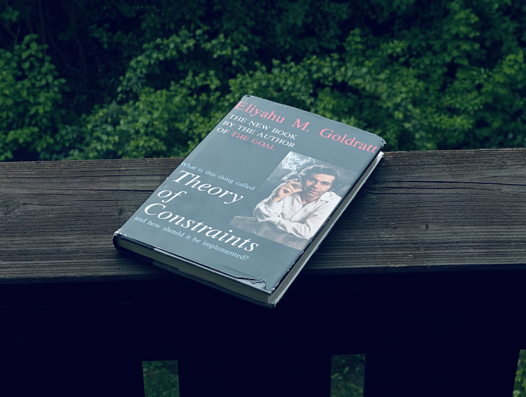
The Theory of Constraints provides a compelling framework for consulting firms seeking to improve delivery, scale operations, or simply gain clarity on what’s holding them back.
One effective strategy that has gained significant traction is the establishment of Centers of Expertise (CoE). These centralized hubs of specialized knowledge and skills create substantial strategic value, driving efficiency, innovation, and the digital transformation of business processes.
Let’s begin by looking at lenses we can use from market and business complexity categories to analyse the data, define the tiering system and drive insights into the targeted operating and sourcing model.
Transformation programmes are complex, multifaceted initiatives that require careful planning, strategic vision, and adaptability. Leading such programmes involves making critical decisions that can significantly impact the success of the transformation. In this article, we propose a few scientifically grounded techniques for making better choices when steering transformation programmes: 1) zoom in and zoom out 2) seek an outside frame of reference 3) reframe the situation and 4) be ready to pivot.
In recent years, the topic of change has gained significant traction in both academic and empirical fields. Rapid evolution in business and social environments compels companies, societies, and individuals to continuously adapt and innovate. This necessity for constant development has made change a recognized norm across all industries and markets, transforming continuous change management into a critical component of organizational ecosystems.
Many organizations today are project-based or project-oriented, and these organizations are strongly connected to corporate strategy. Indeed, the role of project-based operations is 1) to implement corporate strategy 2) to translate this strategy into programmes and projects and 3) to create a competitive advantage for the organizations. In that context, we ask two questions: 1) Do the business operations design parameters apply to project-based operations design? and 2) What changes are required to make design parameters work effectively at project-based operations?
In recent years the topic of transformation has become increasingly important and sparked interest in both academic and empirical fields. Business and social environments are changing quickly and encouraging companies and societies to find new ways to adapt and change frequently. Transformation programmes have become common in all industries and markets -- continuous transformation is a new normal ecosystem.